

Those are Grant McCracken’s words about Graffman and Söderström’s new book “Konsumentnära Varumärkesutveckling”which translates as “Consumer Centric Brand Management”. It is in itself somewhat spectacular that Grant lends his name, and writes the foreward to a book published in Swedish. Yet, this gives you a heads-up that something extraordinary is brewing under the surface.
This is not only an interesting line-up between Graffman – the Dr. anthropologist and Söderström – the senior planner. It is also a great jigsaw puzzle that pieces together many ground-breaking theories in many diverse fields. It does not only undress traditional theory, but also offers a new holistic approach and methodology for managing consumer centric brands with the aid of commercial ethnography.
The short summary
Companies have been more interested in how brands affect consumers, than the other way around. Consumers use brands in an active quest for meaning, identity and belonging. They develop deep emotional connection with brands that can address these underlying needs, view them as an extension of themselves, and reward them with loyalty.
This is a desirable place to be for all companies and brands, but they lack the methods to do it. Consumer centric brand management offers a new way of managing brands that require broad and deep insights about customers, and their everyday lives. These insights cannot be gained through traditional marketing research, because they provide too shallow insights and historical roots.
Broad insights are holistic, because they take individual, micro, and macro social levels into account. Companies have traditionally been doing a poor job of intently building brands that help people in their identity projects (individual), link people together (micro social), and provide solutions to ideological problems (macro social).
Deep insights strive to understand the customers’ underlying needs for meaning, identity, and belonging.
Ethnography and anthropology is essential to gain the required broad and deep insights about customers, which lead to building brands that can operate on more than an individual level. Consumer centric brand management can be applied to all consumer products and services. It’s goal is to build authentic brands that become more relevant to customers, increase their engagement and loyalty, in order to motivate higher prices.
Long summary
The challenges we face
Marketers and companies of our time are faced with new challenges such as fragmented markets, generic products and fickle customers. The world is ever changing. Companies and products have shorter life-spans, trends come and go at a higher rate, and institutions have lost their attractive force. People even feel that nations are becoming increasingly unstable and unreliable.
Relying less on legacy, traditions and common practices, people embark on a journey to recompose their social universe and figure out who they are. In this endeavour they value brands as symbolic resources that can help them invent themselves. This is not a solo project, they do it with the help of others, and to be together with others.
Why consumer centric brand development?
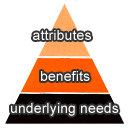
In the face of globalisation product attributes and benefits are becoming increasingly harder to defend. At the same time customers treasure brands for their symbolic values and experiences. They are driven by needs to construct meaning, identity and belonging. They want to be more participatory in the co-authorship of brands, and value authentic brands that can deliver.
Companies have traditionally been more focused on how brands affect people, than the other way around. Even if they have been conscious about how people use their brands, they have lacked the tools to methodologically build brands that can effectively cater these needs. Consumer centric brand development promises to deliver that, using broad and deep insights about customers.
Broad insights are required to understand customers on a macro, micro and individual level. Deep insights are required to understand customers’ underlying needs for constructing meaning, identity and belonging. Ethnography and anthropology are essential for gaining these broad and deep insights.
Broad insights
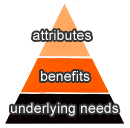
To gain broad insights companies need to study people on a macro, micro and individual level. People are individuals, but also social and cultural beings that participate in communities (micro social) and society (macro social). Sub-cultures, tribes and brand communities operate on the micro social level. Companies have typically done a poor job of intently building brands that support their customers on micro and macro levels.
The consumer centric approach described in the book outlines how to research and develop strategies for brands to become valuable on all levels. Consumer centric brand development is applicable on any consumer product, but high engagement products have a head start. On the other hand low engagement products have more to gain by becoming more relevant to their customers. This can take them out of the nook of competing using product attributes and benefits which are becoming increasingly harder to defend in a global market.
Deep insights
Conventional marketing research views people as rational individuals trying to fill individual materialistic needs. However people are more complex as they use brands to build meaning, identity and belonging. These underlying needs are often unconscious and emotional, and revealed in a social and cultural context.
Traditional marketing fails, because you cannot outright ask people to describe something they are incapable of. Ethnography and anthropology are essential for understanding underlying motives, which is a key to developing consumer centric brands. Broad and deep insights are gained through qualitative research methods, amongst others using the long interview and participative observation techniques.
Ethnography and anthropology
The book has a designated chapter that gives an elemental introduction to ethnography and anthropology . It attempts to clean up the mess of wannabe ethnographers, various misconceptions, and shows that ethnography is not about “cool-hunting”. It goes on to briefly touch on tools of the trade. The chapter ends by stating that it is easy to “look like” an ethnographer, but difficult to think like one.
The process
The process involves four stages: 1) orientation, 2) delimitation, 3) deepening, and 4) definition. It involves a mix of qualitative and quantitative methods.
The orientation stage is a broad analysis of the product category, and the brands cultural and political authority. It aims to discover relevant insights about cultural disruptions, counter-culture, tribes and brand communities, and the customers’ identity projects.
The delimitation stage narrows and defines these findings and validates them using quantitative methods. The deepening stage makes a deeper analysis using qualitative research methods.
Finally the definition stage defines the brand on an individual, micro and macro level. All brands have different potential to operate on these levels. All brands can cater to individual needs. With a proper strategy and execution they can become a valued resource in their identity projects. Some brands have a good potential to support the link between customers (micro social). A few brands have the potential to become a solution to ideological problems in society (macro social).
My own reflections
I have worked professionally with Jonas Söderström since 1995. We also worked together for many years at Familjen (The Family), a communication agency I co-founded in 99, before moving on to start Tribaling. Therefore it was with great anticipation that I read his and Graffman’s new book. It is only fair that you know, and I encourage you to read the book for yourself to make up your own mind.
Graffman and Söderström have done a fantastic job of summing up and connecting the dots between many important theories and practices that I use in my work. We share many sources of inspiration, and it will definately contribute to my Tribaling work.
Folks, this is book is ground-breaking because it pulls all of these great theories together, and draws the best from marketing, ethnography and anthropology. This gives a holistic approach for making brands valuable on all levels (individual, micro and macro). It also offers a viable method for doing it. All consumer brands would benefit from at least considering what this book has to offer.
I personally feel that some parts of the book are highly concentrated juice, and deserve more space to develop. Especially novices to social sciences will be struggling, and should be prepared to dig deeper into all the references supplied. I like the fact that consumer quotes are given throughout the book, demonstrating the powerful connection between marketing and ethnographic insights. This book is in itself a great contribution, especially if translated to English, and I already look forward to what Jonas Söderström and Katarina Graffman can accomplish in the future..