
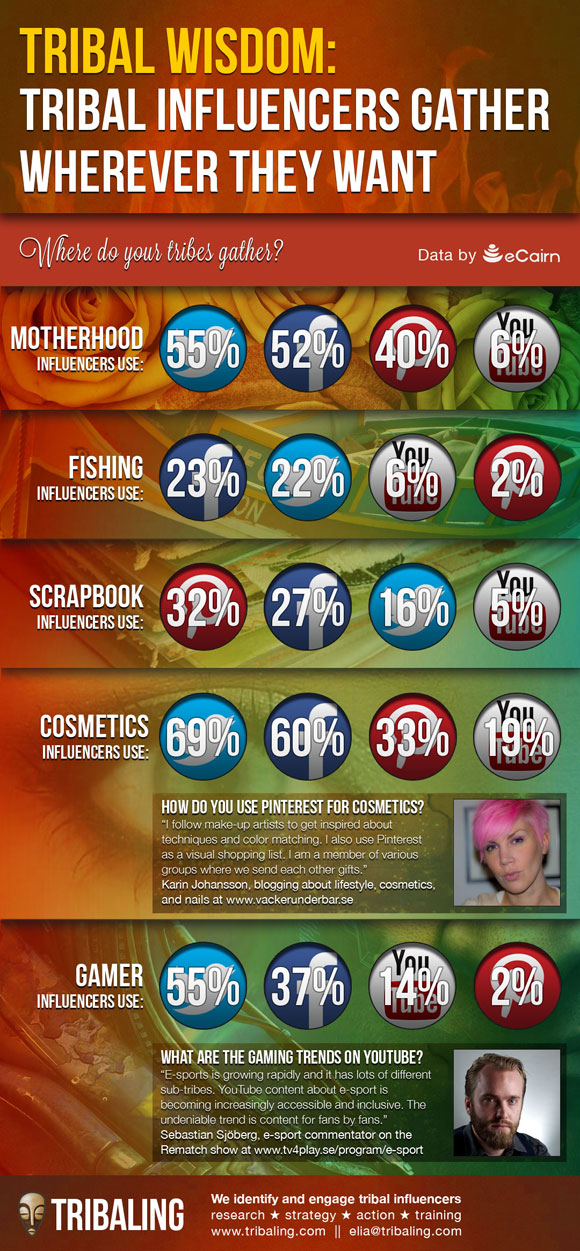
Where do your tribes gather?
People gather around passions, not demographics. Why "women aged 35 in Berlin" is a weaker audience than the tribe they actually belong to.
By Elia Mörling
People gather in tribes around strong passions: fishing, scrapbooking, gaming, running. Everyone belongs to several tribes and moves between them easily. Each tribe has its favourite places to meet and celebrate what it shares. A gaming tribe gathers on video platforms more than on image boards, and a scrapbooking tribe the other way round.
Passions cut across demographics
So why do so many companies still describe their audiences as strangers with little in common? What do 35-year-old women in Berlin really share? Runners are defined by running, not by age or sex. Many passions cut straight across the markers that mass communication was built on.
The same goes for platforms. A company can master the codes of a channel and still come across as intrusive, because the channel is not one crowd. It is many tribes, each with its own culture: values, beliefs, jargon, traditions and practices. Either you are in, or you are out.
From isolated individuals to connected tribes
Platform statistics are almost always cut by age, sex and country, rarely by passion. When you map the tribes instead, you get a truer picture: not isolated individuals with little in common, but connected people with a lot in common. That gives you a cultural well to draw from.
Three steps get you there. Define who your tribes are. Find their key influencers and the places they gather. Then learn their culture well enough to speak it. Your communication becomes more native, more relevant and more effective.
Today
Spaces is one of the six dimensions on The Tribal Map. Each plate in the atlas lists the places its tribe gathers, from taprooms and festivals to forums and rating apps.